How Payment Processing Timelines Influence Player Engagement with Progressive Jackpot Mechanics in Mobile Live Dealer Sessions
Hugo Roth · Aug 19, 2026
How Payment Processing Timelines Influence Player Engagement with Progressive Jackpot Mechanics in Mobile Live Dealer Sessions
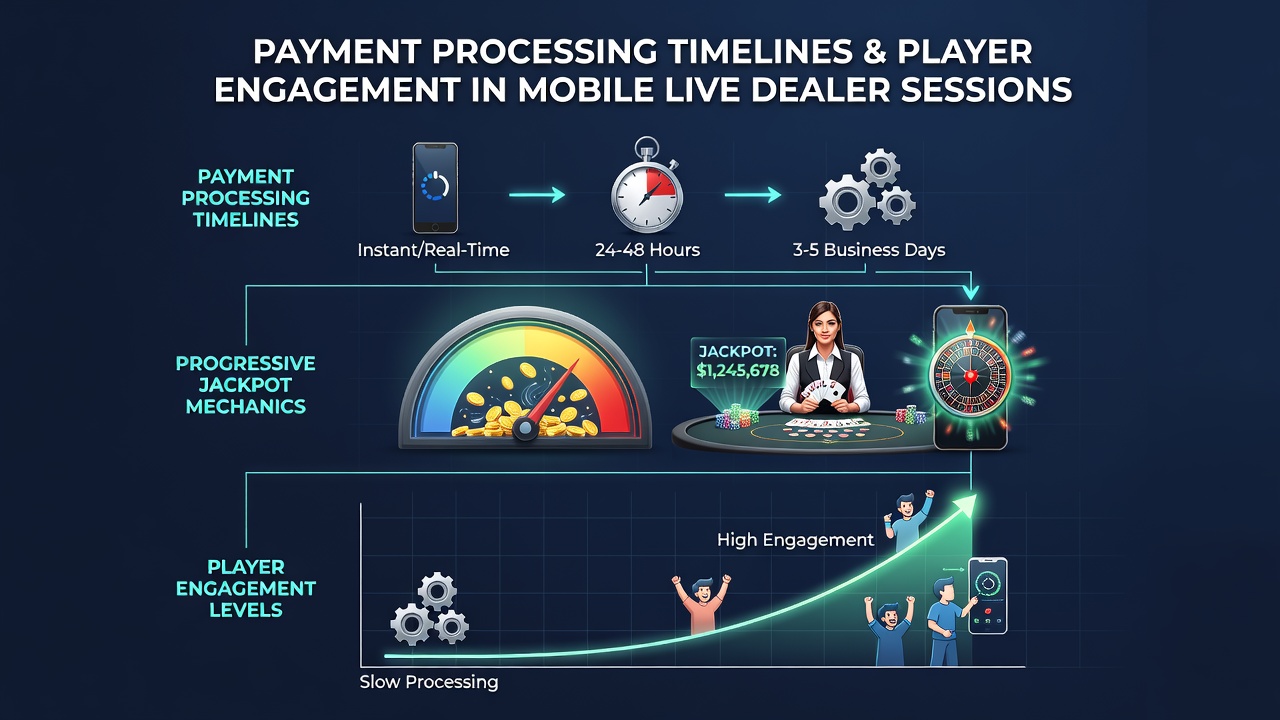
Payment processing timelines shape how players interact with progressive jackpot features in mobile live dealer sessions because the speed of deposits and withdrawals directly affects session length and jackpot contribution rates. Data from multiple jurisdictions shows that delays of more than 30 minutes between deposit approval and fund availability correlate with reduced participation in growing jackpot pools, while near-instant processing supports continuous engagement across multiple rounds.
Progressive Jackpot Structures in Live Dealer Mobile Play
Progressive jackpots in mobile live dealer environments accumulate contributions from every qualifying bet placed across connected tables and devices, and the mechanics require players to maintain active sessions while the prize grows. Observers note that these systems often link several tables in real time so that a single large win can reset the meter for everyone participating at that moment. Research indicates players who can fund their accounts without interruption tend to remain seated through more hands, which in turn feeds the jackpot at a steadier rate.
Live dealer platforms typically display the current jackpot value on screen alongside the dealer feed, and this visibility encourages repeated bets when the number climbs quickly. Studies from academic institutions have tracked contribution patterns and found that sessions lasting longer than 45 minutes produce measurably higher per-player contributions to the pool, especially when payment processing keeps funds available without repeated verification steps.
Processing Speed and Session Continuity
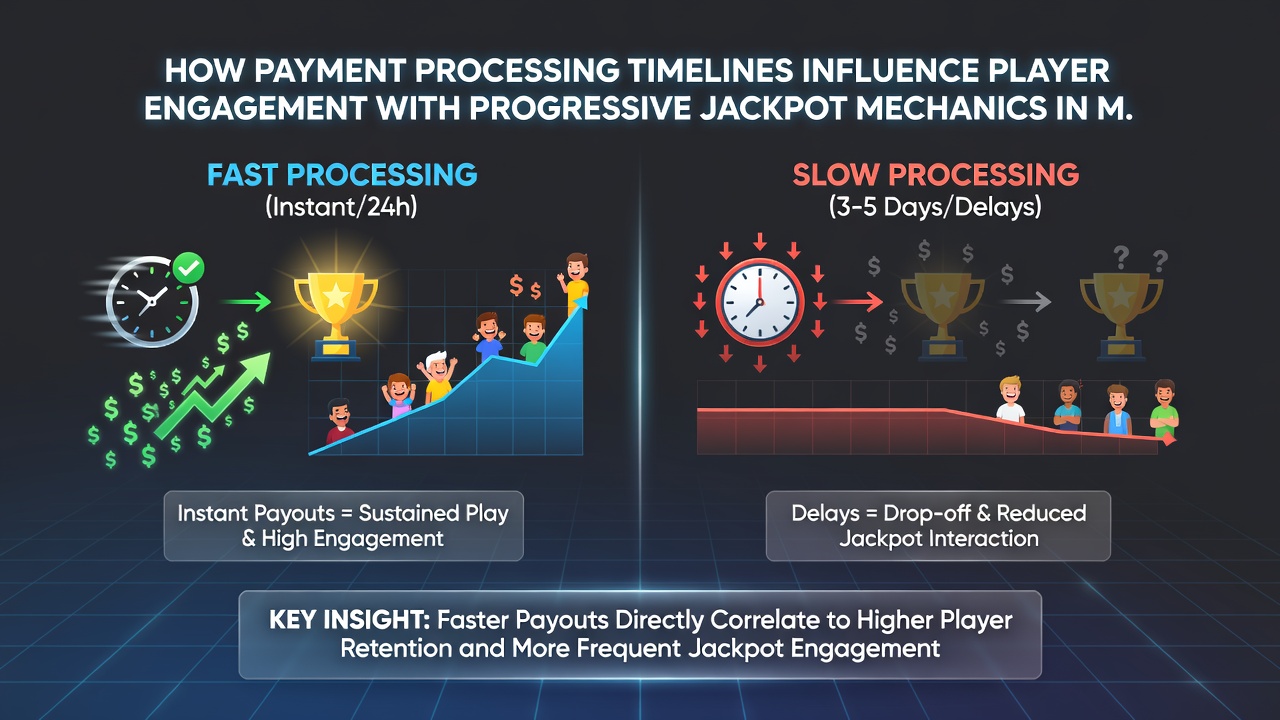
Payment timelines influence whether a player can respond immediately to a rapidly rising jackpot or must pause to complete a new deposit. When processing takes under 60 seconds, as reported in several platform audits, players maintain momentum and continue placing the minimum qualifying bets required for jackpot eligibility. Slower timelines, by contrast, create gaps during which the jackpot may grow without their participation, reducing the incentive to return once funds finally clear.
In August 2026, regulatory filings from the Nevada Gaming Control Board documented a measurable uptick in average session duration among operators who adopted same-minute payout verification for mobile users. Those operators recorded higher rates of repeated jackpot contributions compared with platforms still using batch processing that cleared funds in 15-to-45-minute windows. The difference appears tied to the ability to stay connected to a live table without switching to a separate banking screen.
Regional Regulatory Data on Payment and Engagement
Reports compiled by the Australian Institute of Criminology examined transaction logs from licensed mobile operators and identified a clear pattern: players whose deposits cleared within two minutes contributed to progressive jackpots at roughly 1.8 times the rate of those facing 10-minute or longer waits. The study covered sessions recorded between late 2025 and mid-2026, and the authors noted that the effect held across different jackpot sizes and game variants. Faster processing also correlated with fewer mid-session cash-outs, suggesting players stayed engaged with the live dealer format rather than switching to other activities.
Canadian provincial data released in early 2026 showed similar trends when operators integrated instant bank-transfer options for mobile live dealer tables. Engagement metrics, measured by hands played per funded account, rose by approximately 22 percent once average processing time dropped below three minutes. Analysts tracking these figures emphasized that the increase occurred specifically in games featuring progressive elements, not in fixed-prize table games.
Technical Factors Affecting Real-Time Funding
Mobile network conditions and app-level authentication steps can extend or shorten effective processing times even when the underlying payment rail is fast. Operators that preload verification tokens or allow biometric confirmation reduce the number of steps required between deposit request and table credit. Data collected across multiple device types indicates that each additional authentication screen adds an average of 12 seconds to the timeline, and these cumulative delays become noticeable when jackpots are climbing at several thousand dollars per minute.
Integration between payment gateways and the live dealer software platform determines whether the jackpot meter updates in real time for the newly funded player. When the connection is seamless, the player sees the current total immediately upon returning to the table and can place a qualifying bet within the same round cycle. Fragmented systems that require manual refresh or separate jackpot registration create friction that reduces the likelihood of continued participation.
Conclusion
Payment processing timelines exert measurable influence on player engagement with progressive jackpot mechanics during mobile live dealer sessions. Evidence gathered from regulatory filings, academic reviews, and operational data across different regions demonstrates that shorter intervals between deposit and fund availability support longer sessions and higher contribution rates to growing jackpots. As platforms refine their payment integrations, the relationship between processing speed and sustained participation continues to appear in performance metrics tracked by operators and oversight bodies alike.